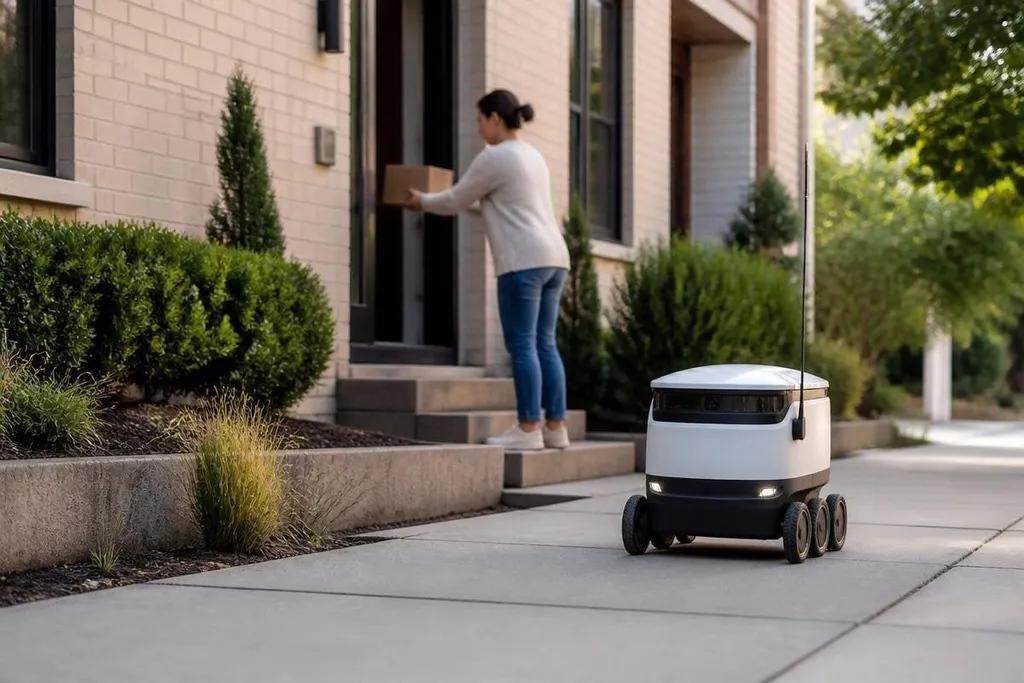
A delivery robot has to do more than move a parcel from one place to another. It must find a safe route, handle people and vehicles, reach the right door, and finish the handoff without a remote operator fixing each step.
This article focuses on the changes that could make delivery robots useful in daily service. No evidence pack was supplied for a company-by-company ranking, so the test here is practical: what should you look for in a real trial?
Quick read
- Better street driving matters more than a faster top speed.
- The handoff at the door remains a separate robotics problem.
- A useful trial should publish remote-help rates, failed trips, and delivery time.
Street driving that works outside a demo
The first area to watch is autonomous driving on ordinary sidewalks and roads. A robot needs cameras, LiDAR, or other sensors to detect curbs, parked objects, people, bicycles, and temporary barriers. It then needs software that can choose a safe path when the map is incomplete.
A route that works on an empty sidewalk proves little. A useful test should show how the robot behaves near a blocked path, a crossing, a steep curb, and a person who changes direction. The robot should slow down, stop, or ask for help when its sensors cannot support a safe choice.
Remote help changes the cost of a delivery route. If one operator must guide several trips, the robot may reduce driving without reducing much staff time. Dated delivery robot deployment reports can show how often people take over, which sets up the handoff at the door.
The handoff at the door
The robot's trip ends at a difficult place: a building entrance. Doors may be closed, lifts may be busy, and the customer may not arrive when the robot does. A secure compartment can protect the parcel, but it doesn't solve access or identity.
Watch for systems that can confirm the customer, open the correct compartment, and record the handoff without exposing the parcel to another person. These steps need clear evidence in a trial report, such as the share of deliveries completed without staff help.
The physical design matters too. A low robot may suit a flat pavement route but struggle with a high doorstep. A tall compartment may hold more food yet make the robot less stable on a slope. Delivery teams should compare the robot with the buildings and streets it will actually serve.
Weather, damage, and missed trips
Delivery robots work close to the ground, where rain, dirt, heat, and loose material can affect sensors and wheels. A route plan that works in dry weather may fail when a camera is covered or a wheel loses grip.
The useful question is not whether a robot can run in light rain. Ask how often it stops service, who retrieves it, and how the company counts a failed trip. Those details connect hardware to the daily cost of delivery.
A strong report should also describe parcel damage, battery charging, and recovery after a stop. Without that information, a smooth video tells you little about a full day of work.
Fleet control and remote help
One robot can receive close attention. A fleet needs software that assigns trips, checks battery state, records faults, and sends a person to the right machine when needed. The number of robots one operator can support is a practical measure of progress.
Look for published figures on trips per robot, remote interventions, charging time, and service calls. These figures show whether the system can keep working when several robots need help at once.
I'd skip any product pitch that shows only a clean route and gives no count for failed deliveries or human interventions. Those are the numbers that decide whether a delivery robot belongs in a service fleet.
A buyer's check before a pilot
Use this short list before approving a trial:
- Define the route, including crossings, slopes, doors, and shared paths.
- Record how many trips finish without remote help.
- Measure delivery time from dispatch to customer handoff.
- Check the plan for rain, blocked paths, damaged sensors, and low battery.
- Ask who collects a stranded robot and how long recovery takes.
The next useful proof will come from trials that publish these figures across normal service, not from another short run on an empty path. Until those reports arrive, judge delivery robots by completed handoffs and human work per trip.